

Overview Table
| Category | Details |
|---|---|
| Model Name | Tata Sierra EV (2025) |
| Manufacturer | Tata Motors Limited |
| Vehicle Type | All-Electric SUV |
| Platform | Gen-2 EV Architecture (derived from Sigma/ALFA platform) |
| Powertrain Type | Dual Motor All-Wheel Drive / Single Motor RWD variants |
| Battery Capacity | 60 kWh – 70 kWh (estimated) |
| Claimed Range | Up to 500 km per charge (approx.) |
| Charging Options | DC Fast Charging (10–80 % in < 40 min), AC Type-2 home charger |
| Acceleration (0–100 km/h) | Around 6.5–7.0 seconds (estimated) |
| Expected Price Range (India) | ₹ 28 – ₹ 35 lakh (ex-showroom) |
| Launch Timeline | Early 2025 (expected) |
| Body Style | 5-Door SUV with Panoramic Glass Roof |
| Interior Theme | Sustainable Materials / Minimalist Design |
| Safety Features | 6 Airbags, ADAS Level 2, 360° Camera, ESC, Traction Control |
| Competitors | Mahindra BE.05 EV, MG ZS EV, Hyundai Kona EV, BYD Atto 3 |
| Tagline (anticipated) | The Legend Returns — Electrified. |
Introduction
The automotive landscape of India is at the brink of transformation. With sustainability taking center stage, Tata Motors — the country’s largest homegrown automaker — has stepped up as the vanguard of this electric revolution. Among its most anticipated offerings stands a name that resonates with nostalgia and innovation alike: the Tata Sierra EV (2025).
Re-imagined from an icon of the 1990s, the new Sierra aims to blend Indian heritage with futuristic engineering, reflecting Tata’s evolving design philosophy and technological prowess.
The year 2025 marks a defining chapter in India’s automotive evolution — the revival of a legend, reborn for a sustainable future. The Tata Sierra EV (2025) represents more than a vehicle; it symbolizes the transformation of Indian engineering, design, and environmental consciousness. Once an icon of ambition in the 1990s, the original Tata Sierra was a pioneer — a bold, homegrown SUV that defined independence and modernity. Today, its electric reincarnation stands as a bridge between nostalgia and innovation.
As Tata Motors accelerates toward an electrified future, the Sierra EV emerges as a flagship of its next-generation portfolio. Built on Tata’s advanced Gen-2 EV architecture, the new Sierra blends cutting-edge technology, striking design, and sustainable materials to deliver an experience that feels futuristic yet familiar. Every curve, contour, and interface of the SUV reflects Tata’s belief that progress must respect legacy.
The Sierra EV is more than an evolution of a beloved classic — it’s a reaffirmation of Tata Motors’ vision to make electric mobility accessible, aspirational, and proudly Indian. With its anticipated range of up to 500 km, intelligent connectivity, premium comfort, and timeless styling, the 2025 Sierra aims to redefine what an Indian electric SUV can achieve.
The Legacy of Tata Sierra: A Symbol Reborn
When the original Tata Sierra EV debuted in 1991, it marked India’s first domestically developed SUV with a distinctive three-door silhouette and wrap-around rear glass. It represented ambition and independence for a young nation opening to global markets. Though discontinued in 2003, the Sierra remained a cultural symbol — remembered fondly for its bold stance and personality.
Three decades later, Tata Motors announced its rebirth at the 2020 Auto Expo as a fully electric SUV. This revival isn’t just nostalgic; it’s strategic. The Tata Sierra EV connects India’s automotive past to its electric future, embodying the country’s journey from industrial awakening to green innovation.
Design Philosophy: Futuristic Yet Familiar
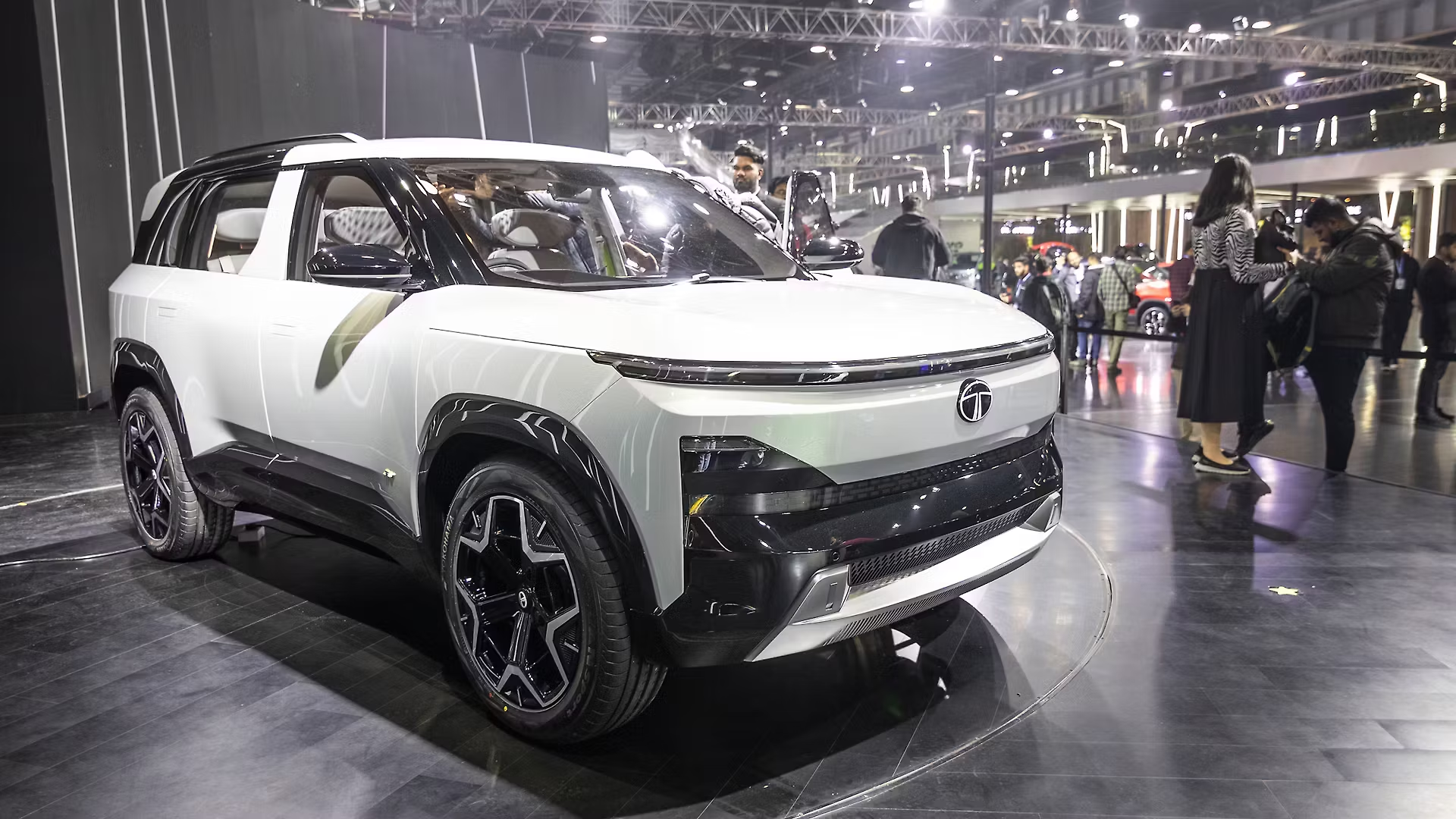
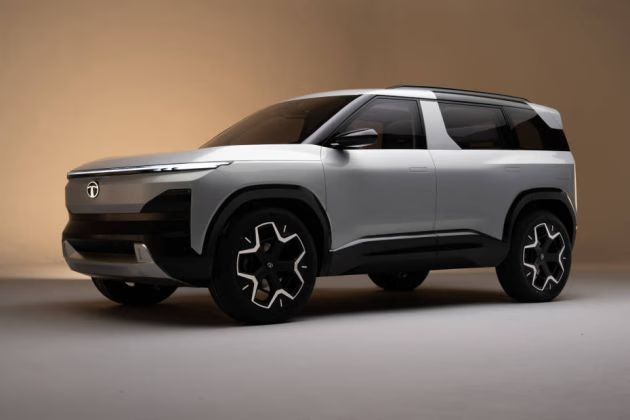
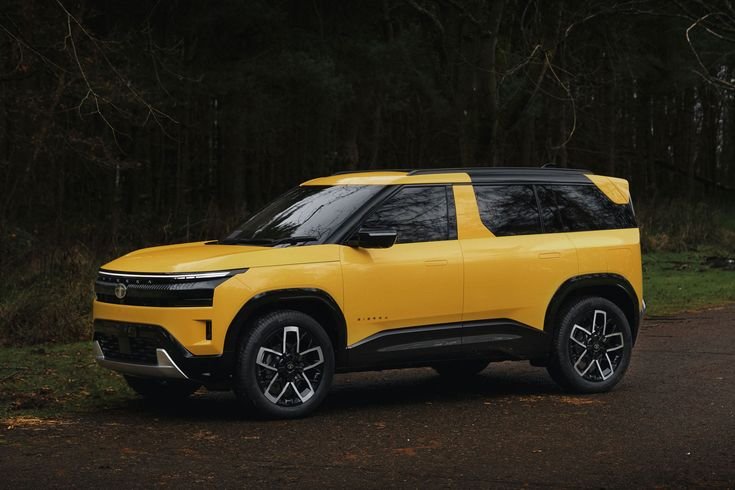
Tata’s design division, led by Martin Uhlarik, has given the Tata Sierra EV a contemporary identity without losing its soul. The body lines are fluid yet muscular, maintaining the Sierra’s signature wrap-around glass theme. The face features a seamless LED light bar, a closed-off grille typical of EVs, and an illuminated Tata logo that conveys modern sophistication.
The sides showcase pronounced wheel arches, aerodynamic alloys, and flush door handles — a nod to efficiency and elegance. The rear retains the wrap-around glass tailgate but with sleeker LED lighting. This is nostalgia evolved — a familiar form rendered futuristic.
Interior Excellence and Comfort Features
Inside, the Tata Sierra EV exudes warmth, sustainability, and simplicity. The cabin follows a “Living Room on Wheels” philosophy: airy, open, and infused with natural textures.
Premium vegan leather, recycled fabrics, and responsibly sourced trims emphasize eco-conscious craftsmanship. The flat floor design, made possible by the skateboard-style battery pack, enhances legroom and spatial harmony.
A panoramic glass roof floods the cabin with light, complemented by customizable ambient LEDs. The driver’s display and central infotainment merge into a single curved interface, powered by Tata’s next-gen ConnectNext OS, offering real-time vehicle analytics, voice-enabled controls, and over-the-air updates.
Performance, Battery, and Range
Under its sculpted hood lies Tata’s Gen-2 EV architecture — lighter, stronger, and more efficient than the Nexon EV’s platform.
The Tata Sierra EV is expected to offer single-motor RWD and dual-motor AWD configurations, generating approximately 210 – 320 hp. The larger 70 kWh battery targets a 500 km range, catering to both urban commuters and long-distance travelers.
Acceleration from 0 to 100 km/h in roughly 6.5 seconds makes the Sierra one of India’s quickest electric SUVs, proving that performance and sustainability can coexist seamlessly.
Charging Capabilities and Efficiency
Tata Motors’ commitment to accessible EV mobility extends beyond the car. The Tata Sierra EV supports both DC fast charging and AC home charging.
Using a 150 kW DC charger, the battery can replenish 10–80 % in under 40 minutes. A home wall box (7.2 kW) fully charges it overnight in about 8 hours.
Efficiency is bolstered by regenerative braking, thermal management, and intelligent energy recycling — ensuring optimal range even in extreme conditions.
Technology and Connectivity Innovations
The Tata Sierra EV embraces Tata’s vision of a “Digital Companion.”
- A 12.3-inch touch infotainment screen with 5G connectivity
- AI-based voice assistant compatible with Hindi and regional languages
- AR navigation with real-time traffic integration
- Biometric driver profiles
- Over-the-air software upgrades
- Smart energy management system with cloud sync
This integration of human-centric technology bridges the gap between mobility and intelligence, turning every drive into an experience of connected autonomy.
Safety and Driver Assistance Features
Safety remains paramount in Tata’s design ethos. The Tata Sierra EV is engineered to achieve 5-Star Global NCAP certification, leveraging high-tensile steel and impact-absorbing crumple zones.
It incorporates ADAS Level 2, offering adaptive cruise control, lane keep assist, blind-spot monitoring, and emergency braking.
Six airbags, ESC, traction control, hill descent assist, and 360° camera vision ensure holistic protection. Combined with EV-specific features like battery thermal cut-off and fire-resistant casing, the Sierra EV sets a new benchmark for Indian EV safety standards.
Variants, Pricing Strategy, and Market Position
Tata Motors plans to launch the Sierra EV in two main variants — a rear-wheel-drive Long Range and an all-wheel-drive Performance edition.
Estimated Price Range: ₹ 28 lakh to ₹ 35 lakh (ex-showroom).
This pricing targets upper-mid SUV buyers seeking premium electric mobility without luxury-brand inflation. Positioned above the Nexon EV and below international imports like the BYD Atto 3, the Sierra EV creates a unique “aspirational yet accessible” segment.
Competition and Segment Overview
The Tata Sierra EV will enter a crowded arena of electric SUVs vying for Indian roads — notably the Mahindra BE.05, Hyundai Kona EV, and MG ZS EV.
However, Tata’s domestic manufacturing edge, after-sales network, and proven EV ecosystem (Nexon EV and Punch EV) grant it a decisive advantage.
Its nostalgic design and modern tech appeal set it apart as a vehicle of emotion and innovation rather than just mobility.
Consumer Expectations and Early Reception
Even before launch, the Tata Sierra EV has stirred enthusiasm among auto enthusiasts and loyal Tata Sierra EV fans. The revival of a 90s icon in electric form touches hearts while signaling progress.
Online communities and EV forums praise its retro-modern balance and anticipated performance. Many see it as India’s answer to global design icons like the Land Rover Defender EV — but at a fraction of the cost.
Environmental Impact and Tata’s EV Vision
Tata Motors has pledged carbon neutrality by 2040, and the Tata Sierra EV plays a central role in this mission.
The SUV’s manufacturing process utilizes solar energy, recycled aluminum, and bio-based plastics. Tata’s collaboration with Tata Power for charging infrastructure further amplifies sustainability beyond the product itself.
Each Sierra EV on the road represents a small but significant step toward reducing India’s carbon footprint.
Production, Availability, and Future Prospects
Production of the Tata Sierra EV will take place at Tata’s Pune and Sanand plants, which are being upgraded for dedicated EV assembly lines. Initial rollout is expected in early 2025 with priority delivery in metro cities like Delhi, Mumbai, and Bengaluru.
Overseas exports to Southeast Asia and Europe are likely to follow once domestic demand stabilizes. Given Tata’s track record, production scalability and after-sales support will be robust from day one.
Cultural and Market Impact
Beyond specifications and price, the Tata Sierra EV signifies something larger — a revival of Indian pride in engineering and design. It proves that homegrown innovation can match global standards while staying rooted in heritage.
For a generation that grew up seeing the original Sierra as a status symbol, this EV becomes a bridge between eras. It honors the past while driving toward a cleaner, smarter future.
Conclusion: The Sierra’s Electric Comeback
The Tata Sierra EV (2025) is more than just a car — it is a statement of evolution. It embodies Tata Motors’ philosophy of responsible innovation, where heritage meets technology and performance meets purpose.
Priced strategically between ₹ 28 and ₹ 35 lakh, the Sierra EV is set to redefine premium electric mobility for India. With its combination of design nostalgia, advanced engineering, and sustainable ethos, it carries the legacy of the original into the electric era — proving that legends never fade; they evolve.
The Tata Sierra EV (2025) is more than just the revival of an automotive icon — it is a declaration of India’s capability to dream, design, and deliver world-class innovation. Three decades after the original Sierra captured hearts with its bold personality, the electric reincarnation carries forward the same spirit — only this time, powered by purpose and technology.
In every sense, the Sierra EV symbolizes Tata Motors’ transformation from a traditional automaker to a visionary leader in sustainable mobility. Its design reflects heritage reimagined for the modern world; its engineering showcases how indigenous technology can rival global standards; and its philosophy reminds us that progress can be both emotional and ethical.
